

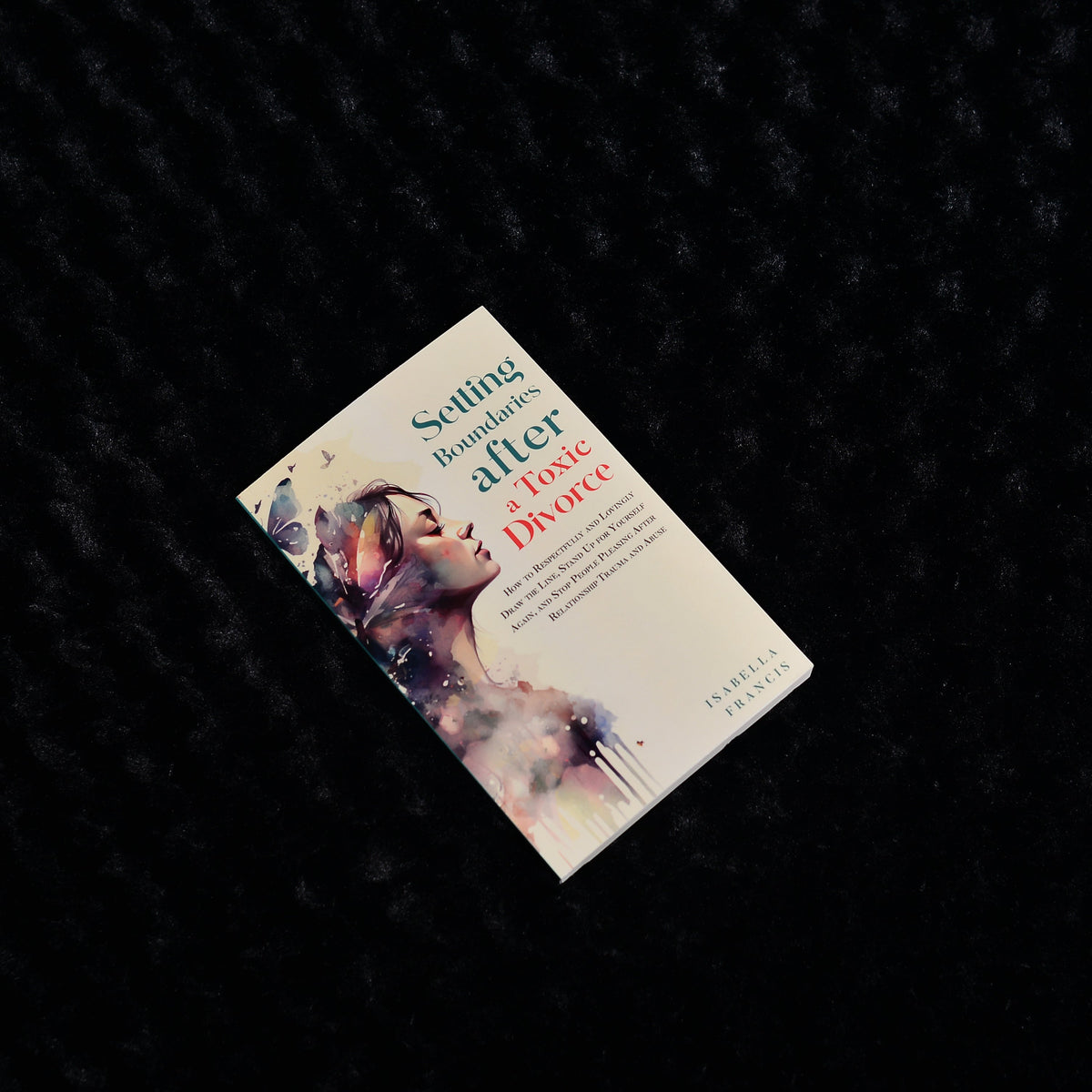
Setting Boundaries after a Toxic Divorce
How to respectfully and lovingly draw the line, stand up for yourself again, and stop people pleasing after relationship trauma and abuse.
Saying no still costs you something. This is the book about why, and what to do with that.
- ✓Why setting boundaries is an act of self-care, not a selfish one
- ✓How healthy boundaries differ from the ones that quietly punish people
- ✓What to do about the guilt and the fear of retaliation that follow a line
- ✓Boundaries with a co-parent, and the financial and legal pressure alongside them


 The Complete Recovery SetEvery stage of the road, on the shelf at once
$76.96
The Complete Recovery SetEvery stage of the road, on the shelf at once
$76.96Orders are packed and dispatched within 3 to 5 business days. You will get a tracking number by email as soon as it leaves.
Shipping is calculated at checkout based on your address. The complete four-book set ships free.
Yes. International delivery times and rates are shown at checkout before you pay.
Returns are accepted within 30 days of delivery, in resalable condition. Reach out and we will send return instructions.
Seven chapters, and five places you stop and do the work.
Three parts, running from the psychology of a toxic relationship out to the boundaries themselves. Five workbooks are printed inside, at the ends of chapters, because reading about a boundary and holding one are different skills.
The Psychology of Toxic Relationships
What a toxic relationship actually is, and what it leaves behind after the divorce.
The Power of Boundaries
The types of boundaries, and how healthy ones differ from the ones that punish.
The Challenging Aspect
Fear of retaliation, guilt, boundaries with co-parents, and the financial and legal pressure.
The Art of Drawing the Line
Saying the words, once you have decided what the line actually is.
And the Kids?
A full chapter on the children, separate from negotiating with the other parent.
Breaking the Cycle
Why the same dynamic keeps reappearing with new people.
Self-Work
The closing chapter, on rebuilding the person who holds the boundary.
“Setting boundaries is not a selfish act; it is an act of self-care and self-respect. Essential for creating a life that aligns with your true essence and leads to authentic happiness.”
The whole road, and where this one sits on it.
These are not volumes one to four. They are four different places you might be standing. Each stands alone. Start wherever you actually are.

Self-Compassion for Divorce Recovery
The divorce is recent, or the loudest voice in your head is the one blaming you.

Codependency Recovery Post-Divorce
The same habits followed you out of the marriage and you can see them repeating.

Setting Boundaries after a Toxic Divorce
You know what you want and cannot make yourself say it out loud.
Co-Parenting After Divorcing a Narcissist
The pressure is coming from an ex who will not cooperate about the children.
Standing in more than one of these?Most readers are. Take all four and the next stage is already on the shelf.
$76.96Upgrade to all fourWhat this book will not do for you.
If anything in the left column is what you came for, this is the wrong purchase, and we would rather say so here than have you find out at page 40.
It is not
It is

I went looking for this book and could not find it.
Everything I picked up assumed the other person would eventually respect the line. Mine did not.
So it does not open with scripts. It opens with the psychology of a toxic relationship and what a divorce like that leaves behind, because that is where you actually are when you pick it up. The boundaries come after.
And it stops five times to hand you a workbook, because reading about a boundary and holding one are not the same skill.
Or take the whole road.
Boundaries rarely stay the only problem. Most people who start here end up wanting the one about the grief underneath it, or the pattern that keeps putting them back in the same position. The set puts every stage on the shelf.
The questions people actually ask.
That is most of the book. Chapter three is called The Challenging Aspect and covers the difficulty of breaking old patterns, the fear of retaliation, and the guilt that arrives the moment you draw a line. It treats not holding the boundary as the normal starting point, not a personal failing.
Five workbooks are printed inside the book, at the ends of chapters. They are part of the book itself, not a separate purchase.
Yes. Chapter three covers setting boundaries with co-parents alongside the financial and legal challenges, and chapter five is devoted to the children. If your ex is a narcissist specifically, Co-Parenting After Divorcing a Narcissist goes deeper on that situation.
Isabella answers this directly in the book. In her words, setting boundaries is not a selfish act, it is an act of self-care and self-respect. A full chapter goes to the guilt and fear that make people believe otherwise.
Start here if you know what you want and cannot make yourself say it. Start with Self-Compassion if the divorce is recent and the grief is loudest. Start with Codependency if the same pattern keeps repeating. Start with Co-Parenting if the pressure comes from an ex who will not cooperate.
Placeholder. Confirm the returns and guarantee terms against store policy before publishing, then replace this answer.
